Skip to content

GXG Peptides

INNATE INTELLIGENCE Research

Free Shipping on all Orders over $100+

Three labeled vials with liquid

Categorized Research Products

Categories

Peptides are at the forefront of modern research in the field of reproductive health support. By acting on receptors in the central nervous system, they can increase libido and help with erectile dysfunction or hypoactive sexual desire disorder in perimenopausal women. Thanks to their targeted action, peptides are becoming a promising tool for maintaining and improving reproductive health at different stages of life.
Peptides studied in relation to sleep reveal regulatory mechanisms that coordinate sleep phases and the recovery of brain functions. These molecules shorten the latency of falling asleep, deepen the regenerative stages of the sleep cycle, and promote the elimination of waste products from brain tissue. Several peptides also reduce the frequency of nighttime awakenings and mitigate the impact of stress factors on sleep.
Peptides have earned a place among the most sought-after molecules in overweight and obesity research in recent years. They can influence metabolic pathways that determine how quickly we burn calories, when we feel full, and whether fat is stored or broken down. Their effects allow for a deeper understanding of the mechanisms of weight regulation and open the door to innovative therapeutic approaches.
Peptides play an active role in regulating processes that shape information processing, learning and maintaining mental performance. They intervene in neuronal networks, where they modulate signalling pathways associated with neuroplasticity, the formation of synapses, and the production of neurotransmitters. Some peptides promote faster learning, increase concentration and improve memory skills.

Peptides for immune enhancement research provide a more detailed picture of how the body controls and modulates immune responses. Thanks to precise intervention in cell signalling pathways, they influence the formation, activity and differentiation of immune cells. Some peptides also support the regeneration of tissues damaged by inflammation and protect the body from the negative effects of oxidative stress.
Peptides are becoming the focus of research focused on anabolic processes. They affect protein synthesis, stimulate the release of growth hormone (GH) and insulin-like growth factor 1 (IGF-1), thereby creating favourable conditions for muscle hypertrophy. At the same time, some peptides inhibit myostatin activity, leading to more efficient development of muscle fibres, while others accelerate the regeneration of damaged structures.
Metabolic Health Restoration research focuses on the biochemical pathways that govern how the body transforms nutrients into energy. Unlike simple weight loss, this field investigates the underlying mechanisms of metabolic flexibility—the body’s ability to efficiently switch between burning carbohydrates and fats.
Longevity peptides represent a dynamically developing field that offers new possibilities in influencing the ageing process. Their effects include modulating signalling pathways associated with cellular renewal, supporting mitochondrial function, and optimising metabolic processes. Some peptides have shown the ability to stimulate collagen production, improve neuroplasticity, and influence the production of growth factors.
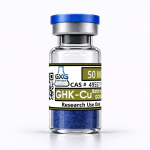
GHK-Cu 50mg — Copper Peptide for Regenerative & Longevity Research
Peptides studied in the context of healing and regeneration intervene in the fundamental biological processes that control the repair of damaged tissues. They promote cell proliferation and migration, regulate inflammatory mediators and stimulate collagen synthesis, thereby significantly accelerating the recovery process after injuries or surgical procedures. The use of these mechanisms is a basic prerequisite for the development of strategies supporting the regeneration of muscles, tendons, skin or epithelial structures.
0